


How Mature Is Your AI Governance? 7 Questions to Ask
Most organisations moved fast to adopt AI tools and slower to govern them. That gap is where risk quietly accumulates — unclear accountability, unmonitored models, and decisions nobody can fully explain after the fact. Before investing in more AI capability, it's worth asking how mature your governance actually is.
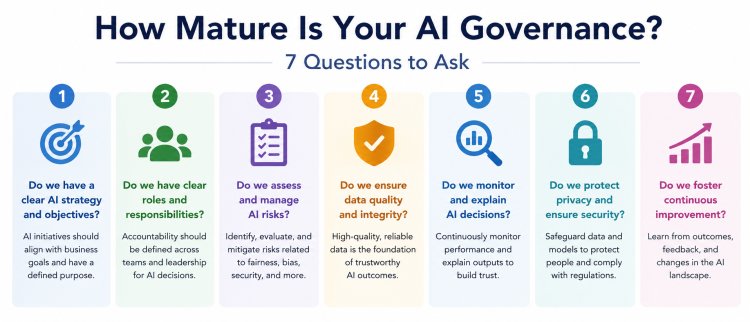


Start with these seven questions
- Do you have a documented inventory of every AI system in use, including ones adopted by individual teams without IT's involvement?
- Is there a named owner accountable for each system's outcomes, not just its uptime?
- Can you explain, in plain language, how a given AI-driven decision was reached?
- Are your models tested for bias and performance drift on a recurring schedule, not just at launch?
- Do employees know which AI use cases are approved, restricted, or banned outright?
- Is there an incident process specifically for AI failures, separate from generic IT incident response?
- Would your governance framework hold up if a regulator asked for evidence tomorrow?
What the answers tend to reveal
Organisations that struggle with more than two or three of these questions are usually still in an early, reactive stage of governance — rules exist on paper but aren't consistently applied. Answering "yes" confidently across the board, with evidence to back it up, is a genuine sign of maturity that most enterprises haven't yet reached.
Maturity is a moving target
AI governance isn't a project with an end date; regulation, model capability, and internal usage all keep shifting. Treat it as a capability you build and re-assess regularly, rather than a policy document you write once and file away.
Read more >> https://assess.navitecai.com/