



2026 Market Trends and Facts For Dubai to UK Cargo
Explore Dubai to UK cargo services in 2026, including shipping trends, air and sea freight, customs updates, and real market facts.
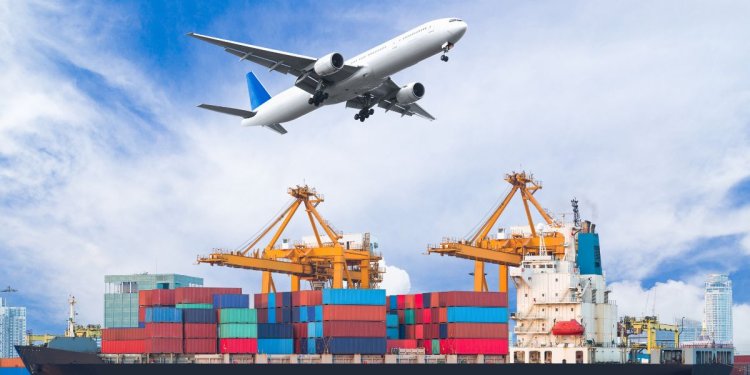


Dubai to UK cargo services are changing fast in 2026. This route is no longer judged only by a freight quote and an estimated delivery date. Businesses now care more about shipment visibility, customs accuracy, faster booking, and the ability to switch between air freight, sea freight, and alternative routing when markets become unstable. That shift is happening at the same time that UK–UAE trade remains strong. In the four quarters to the end of Q3 2025, total UK trade with the UAE reached £25.3 billion, and total UK exports to the UAE reached £15.9 billion. The same factsheet says that in 2025, around 14,200 UK VAT-registered businesses exported goods to the UAE. These figures show why the Dubai–UK lane continues to matter for importers, exporters, freight forwarders, eCommerce sellers, and wholesale supply chains.
Why Dubai to UK cargo services matter more in 2026
The biggest reason this topic is trending is that Dubai is not just a city where cargo starts. It is one of the world’s most important logistics gateways. Businesses use Dubai as a hub for consolidation, re-export, warehousing, urgent dispatch, and regional distribution. For UK-linked cargo, that means Dubai can serve both direct UAE demand and wider Gulf-connected trade flows. When thousands of UK businesses are already exporting into this market, cargo services become part of a much bigger commercial system rather than a simple shipping transaction.
Another reason the route stands out in 2026 is scale. Dubai International Airport handled 2.2 million tonnes of cargo in 2024, up 20.5% from 1.8 million tonnes a year earlier. Dubai Airports also said DXB connects to 272 destinations across 107 countries through 106 international airlines. Those numbers matter because cargo strength is not only about local demand. It is also about how much lift, network reach, and handling power a city can provide when businesses need speed or flexibility. A route backed by a logistics hub of this size naturally becomes more attractive for UK-bound freight.
Digital freight is becoming the new standard
One of the clearest 2026 market trends is the move toward digital booking and digital cargo management. Emirates SkyCargo said that by December 2025, almost 80% of all shipments were booked digitally. It also highlighted continued growth in direct customer APIs, third-party digital marketplaces, and faster payment tools such as PayCargo. In simple terms, this means the cargo industry is moving away from slow manual coordination and toward faster, more trackable shipment workflows. For a business shipping from Dubai to the UK, that can reduce quoting delays, improve documentation accuracy, and make it easier to respond to stock pressure or urgent customer demand.
This digital trend matters because modern cargo buyers do not only compare rates. They compare response times, booking convenience, document handling, tracking quality, and problem resolution. A freight service that still depends heavily on manual back-and-forth can lose business even if its base price looks competitive. In 2026, the cargo experience itself has become part of the service value. That is especially true for SMEs and eCommerce sellers that want international shipping to feel as simple as domestic delivery.
Air freight is gaining strength on this lane
Air freight remains one of the most important pieces of Dubai to UK cargo services. This is not surprising. Many goods moved on this corridor are high-value, time-sensitive, or commercially urgent. Businesses shipping electronics, mobile accessories, medical items, luxury goods, documents, or launch-critical retail stock often place a higher value on speed and predictability than on the lowest possible shipping rate. Strong trade volumes and expanding cargo capacity are reinforcing that pattern. Emirates SkyCargo described 2025 as a milestone year and entered 2026 with higher digital maturity and a stronger customer-facing cargo platform.
A good real-life example is Emirates Courier Express, launched in April 2025. Emirates said the service had already moved several thousand packages from markets including the UAE and the UK, with an average delivery time of less than 48 hours. It runs on Emirates’ network of 250+ aircraft and is built around direct movement rather than the older hub-and-spoke parcel model. That is a major sign of where the market is going. Cross-border cargo is increasingly expected to be fast, visible, digital, and business-friendly. What used to feel like “premium express” is now becoming a normal expectation in parts of the market.
This shift also reflects how buyers think about cost in 2026. A delayed shipment is not just an inconvenience. It can mean missed marketplace sales, production slowdowns, stockouts, event delays, or unhappy B2B customers. So even when air freight costs more than sea freight, it can still make better commercial sense. Businesses are increasingly calculating the full cost of delay, not only the cost of freight. That is one reason Dubai to UK air cargo continues to stay relevant despite wider pressure on supply chains.
Sea freight still matters, but flexibility matters more
Sea freight remains a key option on the Dubai–UK route, especially for commercial stock, bulk cargo, larger consignments, and cost-sensitive movements. For wholesalers, retailers, and companies moving palletized or containerized cargo, ocean shipping can still offer a better cost structure than air. The UK side of the route is also strengthening. DP World said London Gateway handled more than 3 million TEU in 2025, up more than 52% from 1.9 million TEU in 2024. Southampton also topped 2 million TEU, taking DP World’s UK total to more than 5 million TEU. That scale improves the UK’s ability to receive and move large cargo volumes efficiently.
But the real 2026 trend is not “air versus sea.” It is flexibility across both. Ocean freight is still valuable, yet recent Middle East shipping disruptions have shown how quickly routing conditions can change. Maersk’s Middle East Operational Update 22 said bookings for some cargo categories were suspended to and from several regional markets, including restrictions affecting UAE flows, while alternative land-bridge and workaround solutions were being used. The same update introduced emergency freight rates for affected cargo: USD 1,800 for a 20-foot dry container, USD 3,000 for a 40-foot dry container, and USD 3,800 for reefer, special, and dangerous-goods containers.
That is a real-life market signal. Shippers can no longer assume that one fixed route will remain the best option from start to finish. A business that usually prefers sea freight may need air freight for urgent SKUs. Another may need sea freight for core stock but keep a contingency plan for delays. In 2026, the strongest cargo providers are not the ones that only offer a standard lane. They are the ones that can adjust quickly, present alternatives clearly, and protect the customer’s supply chain when conditions change.
Customs and documentation have become part of service quality
Another major trend is the growing importance of customs readiness. HMRC’s CDS Declaration Completion Instructions for Imports were last updated on 28 March 2026. The guide explains how to complete data elements for import declarations in the UK’s Customs Declaration Service. It also shows how frequently rules and field-level requirements can change. That is important because cargo performance is not only about physical movement. A shipment can leave Dubai on time and still get delayed in the UK if the commercial invoice, packing list, customs value, classification, or declaration data are weak.
For businesses shipping from Dubai to the UK, this means freight service quality now includes documentation quality. A reliable cargo provider should understand commodity descriptions, invoice consistency, importer details, value declaration, and the data needed for UK customs processing. In 2026, documentation is no longer just paperwork in the background. It is one of the main drivers of transit reliability. That is especially important for commercial shipments where delays can disrupt cash flow, warehouse planning, or customer commitments.
What businesses are really looking for now
The market is clearly moving toward a smarter cargo model. Businesses want fast booking, clear tracking, and strong communication. They also want services tailored to shipment type. A small urgent parcel does not need the same service design as a container of retail inventory. A temperature-sensitive product does not move like general cargo. A business shipping promotional stock before a campaign launch has different priorities from a wholesaler replenishing stable inventory. The Dubai–UK cargo market is becoming more segmented and more strategy-led.
That is why the “best” cargo service now depends on the shipment profile. Air freight suits urgent, high-value, or time-critical cargo. Sea freight makes sense for larger, less urgent, and cost-sensitive cargo. Express services work well when customer experience and delivery speed are central. Multimodal planning helps businesses spread risk and manage cost. The important change in 2026 is that customers increasingly expect providers to explain these choices clearly instead of pushing a one-size-fits-all option.
Real-life facts behind the trend
The numbers behind this lane explain why it keeps attracting attention. UK–UAE trade is large enough to support long-term cargo demand. DXB’s cargo growth shows that Dubai’s physical logistics base is expanding. Emirates’ digital-booking figure proves that the cargo buying process itself is modernizing. Emirates Courier Express shows that cross-border delivery expectations are getting faster. HMRC’s March 2026 update shows that customs compliance remains a live issue, not a static one. Maersk’s emergency charges and booking limits show that supply-chain resilience is not a theory. It is a real operating challenge that can quickly affect costs and planning.
Conclusion
Dubai to UK cargo services in 2026 are being shaped by four forces at once: strong trade demand, digital freight adoption, tighter customs expectations, and route disruption risk. That combination is changing how businesses choose freight partners and shipping modes. The old model was simple: get a rate, book a shipment, wait for delivery. The new model is more strategic. Businesses want visibility, compliance, flexible routing, and the right transport mode for each shipment type. On this route, the providers that stand out will be the ones that combine Dubai’s logistics strength with UK import knowledge and fast, transparent customer service. That is why Dubai to UK cargo is more than a freight topic in 2026. It is a supply-chain performance topic.
FAQs
What is the fastest way to ship cargo from Dubai to the UK?
Air freight is usually the fastest standard option, while Emirates Courier Express has reported an average delivery time of less than 48 hours for the markets it serves, including the UAE and the UK.
Is sea freight from Dubai to the UK still worth using in 2026?
Yes. Sea freight still makes sense for larger and less urgent cargo, but recent disruption has made route flexibility and contingency planning much more important.
Why is customs documentation so important now?
Because UK import declaration rules continue to be updated, and paperwork errors can delay clearance even when the cargo itself moves on time. HMRC updated its CDS import declaration guidance on 28 March 2026.
Why is Dubai such a strong cargo origin point?
Because it combines major air connectivity, large cargo volumes, and a broad logistics network. DXB alone handled 2.2 million tonnes of cargo in 2024 and connects to hundreds of destinations worldwide.
What is the biggest cargo trend on this route in 2026?
The biggest shift is toward smarter, more digital, and more flexible shipping. That includes high digital booking adoption, faster cross-border delivery expectations, and more attention to alternative routing when sea lanes face disruption.